

Tag Archives: proper etiquette

Argument Aftermath

Address the Issue

communication dos and don'ts
Argument Aftermath

Dos

If you sweep things under the rug, eventually someone will trip over the lump.

In my experience, it is best to wait for the fire to die out before revisiting the source of the inferno. For the passionate, this is not easy.

Be patient

It is all too tempting to hash it out, right there and then, while still flush from its heat. Sometimes this can result in a hefty helping of the Silent Treatment; the heartburn kind. Often, conflict is like an episode of Three’s Company; something or someone has been misunderstood or not completely transparent. Purely open communication is…

…the ability to fully express your perspective to your partner and, brace yourself, seeing things from your partner’s perspective.

It is best to wait until both parties are calm and ready to listen before revisiting an issue.  The aftermath of an argument takes time.

argument aftermath communication dos
Argument Aftermath

Often, couple`s therapists will use tools for listening like the ‘speaking rock.’ The person in possession of the rock is the only one allowed to talk. This means that the one without the lump of stone is to listen. Corny! But it works. If nothing else, a huge spotlight exposes how often we interrupt one another – especially when we don’t like what we are hearing.

I once read on Pinterest,

‘Most people do not listen with the intent to understand; they listen with the intent to reply.” Steven R. Covey

Something to think about the next time your partner is holding the rock. If an apology is in order, and it probably is, see my article on apologies to better your approach.

Don’t

Do Not Use the Car.

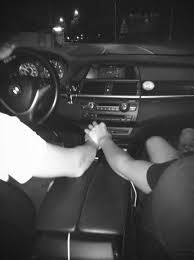
Fight the urge to approach the ‘we should talk’ conversations when driving. Why, you ask?
communication don't use the car
argument aftermath

You have a captive audience. Literally, your partner is trapped with nowhere to go. If they are not ready for this conversation or you are not abiding by the sharing rules of the speaking rock, you will land yourself in a bigger argument and possibly on the receiving end of the Silent Treatment or the law with a speeding ticket.

Trust me on this. Getting out of the car to walk is so clické, but young couples everywhere have been there. Perhaps, it is their flair for the dramatic. But as we get older no one has time for walking (or the shoes because, let`s face it, these talks always happen when we are dressed up) and more often than not we are on the highway.

Avoid Tight Spaces

Even if you have all the best intentions and you promise yourself not to let the conversation become heated, the odds are that it will blow up in your face. Cornered animals tend to jump on the defensive. They turn rabid and snarl. When strapped in and forced to stare straight ahead, there is nowhere for the anxious energy to go. People need their space and freedom to truly express themselves, especially when threatened. Body placement says a lot about what we are communicating; standing wagging a finger, sitting with crossed arms, or even pacing are all conditioned ways to process and respond. We pick these up in our childhood and they are our own coping mechanisms.

Not only does the trapped person need an outlet for this energy but it serves the partner well to bear witness. We take greater cues from one another’s body language than words, especially from our partners.

When a driver is backed into a conversation and stopping is not an option, I promise you that they are visualizing pushing you out of the moving car. Okay, if it was meant to be, they may drop you at the next corner even in their fantasy.

Regardless, the mental message is the same: SHUT UP or GET OUT!
communication don't use the car
argument aftermath

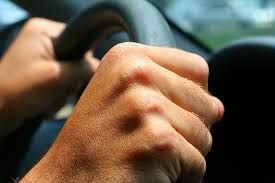
But to avoid the drama that would certainly follow that scene, not to mention criminal charges, the driver may opt to white-knuckle the rest of the drive. They may pick up speed and begin to drive recklessly and erratically. Do not kid yourself.  They are not distracted by the conversation. They are trying to get home as fast as they can to get you the hell out of the car.

Recap

Do not confuse the passenger seat with a soapbox or the car with an interrogation room. If…I mean when, an ugly conversation needs to take place, let it be somewhere that offers an escape. At least at home, if a door has to slam, no one is left on the side of the road (in uncomfortable shoes).


RSVP, Damn It!

RSVP

… a tired custom…

For everyone who has ever been brave enough to organize an event, whether it be as intimate as tea or involved as a wedding, I appreciate your tenacity to follow through despite the slow demise of social etiquette upon us today. Will the RSVP be phased out because it is simply ignored by far too many? Will it be an old, tired custom that will be abandoned like the curtsy or holding the door for another? Not if I have anything to say about it.

Let’s for a moment believe that there is a confusion with the translation. One of the first acronyms of our time, RSVP stands for répondez, s’il vous plaît. Yes, it is French.

The exact translation is ‘respond if you please.’

Perhaps this is the cornerstone of the debate. “If you please” is subject to explanation. This does not mean that if you want to. Quite simply, if you please is a polite way of saying ‘please’ in French. Sometimes the most accurate translation is not the correct one. For instance, in German, hunger is a state to which one belongs, so they say, ‘I have hunger’ but, the true English translation is ‘I am hungry.’ This rule applies with RSVP. Respond if you please simply means, ‘please answer.’

Or, like many hosts will secretly be chanting as the impending date encroaches,

….”Reply, damn it!”

This does not mean reply only if you are attending or only if you are not attending.  This means reply, respond, answer in person, by phone, by text or by email no matter what.  Announce your intentions even if it is the ever non-committal, maybe! It is the very least you can do when someone has gone to the trouble of planning an event and has been so kind to consider you as a worthy guest.

… Our ethics are being compromised with every fragmented and micro human connection we make.

By responding, the host can accurately accommodate the number of guests expected. That way they can avoid waste or, worse, not having enough food or amenities for everyone. Oh, just so you know, everyone who has ever hosted anything…ever, just shuttered unanimously at the thought of running out of provisions.

Unfortunately, I believe that this growing trend of not ‘RSVP’ing is the root of a far bigger problem.

Our social accountability is depleting rapidly in this high-speed world we have created.

With the click of the mouse, we are able to scan images and messages with no real appreciation for the effort, time or individual responsible for the content. Our ethics are being compromised with every fragmented and micro-human connection we make.

Let me give you an example. How is it appropriate to click ‘like’ on a Facebook status that illustrates someone struggling or announces the passing of a loved one? If you don’t have time to write a few genuine words of support or condolences, please resist the urge to click ‘like.’ This is about basic human respect, appreciation, and empathy. There seems to be a shared unwillingness to commit or be responsible. With every click of the mouse or swipe of the screen, we are dismissive of expediency. Which brings us back to the RSVP. Please respond. When someone has sent you an invitation, especially when it comes through the mail, has a real postmark or is hand delivered, allot them the common, quickly proving to be not-so common, courtesy of answering them.

 There seems to be a shared unwillingness to commit or be responsible. With every click of the mouse or swipe of the screen, we are dismissive with remarkable expediency.


Which brings us back to the RSVP. Please respond. When someone has sent you an invitation, especially when it comes through the mail, has a real postmark or is hand delivered, allot them the common, quickly proving to be not-so common, courtesy of answering them.

Which brings us back to the RSVP. Please respond. When someone has sent you an invitation, especially when it comes through the mail, has a real postmark or is hand delivered, allot them the common, quickly proving to be not-so common, courtesy of answering them.

Small human decencies are fading out of existence at a startling rate because we are too busy and so connected to the entire world that we lose sight of our immediate surroundings. The RSVP holds us to a higher standard of accountability. Rise to it because thanks to social media even ‘RSVP’ing is as effortless as clicking a response.


Apology

There are two types of apology.

Both types have two parts…

One: the sincerity

Two: the purpose of your apology

The first apology addresses humanity and compassion. When a co-worker loses a loved one or a tree lands on your friend’s car. You are sorry it happened to them and understand their hurt. This is not ownership or an admission of guilt. It is identifying with human anguish, suffering, or unforeseen misfortune.

The second apology is the one I want to discuss. It is the one you owe someone because you wronged them in some way.

This type of apology is a promise.

When you make an apology, you are actually promising that, if given the opportunity to do it over, you will do it differently.

This apology requires a change in behaviour on the part of the offender.

noU


Most imporatantly, it includes two ‘I‘s. I am sorry that I… The first part is the admission, and the second is the accountability. The second ‘I‘ is critical.

‘I’m sorry that your feelings are hurt’ is NOT an apology and

“I’m sorry that I hurt your feelings,” is.

An apology should never contain the word ‘but’ either.

‘But’ implies a contradiction, or it is a flat-out dismissive. According to Dr. Phil, ‘but’ means forget everything I just said. That goes for although and however too. These negate whatever statement that preceded it.

Consider, “I’m sorry I hit you, but you made me mad.” This translates to, I am NOT sorry that I hit you. You should be sorry for making me mad.

The weight of an apology is based solely on the impact your words or actions have on another person or party. You don’t apologize to absolve yourself of guilt or blame; it is an affirmation of empathy that helps someone else’s healing.

Let’s say you bump into a random shopper at the mall. You weren’t looking, nor were they, and the two of you collided. Other than the obvious startle, no harm has been done to either you or the stranger. Socially balanced people say sorry, maybe even excuse me, and go on their way. But what if that same bump causes them to drop their fragile parcel, or they are sent off kilter and fall down a flight of stairs? Then, this would warrant a greater apology unless of course, you are the kind of person who would dart away as quickly as possible. In which case I have no idea why you are even bothering to read this because the likelihood of you apologizing or being accountable for anything is slim, and I hope that you are wealthy and have a good lawyer.

The point is that the bump on your part did not change. The outcome forced upon the stranger did. Ergo, the apology is dependent on their experience, not yours.

It’s like the law of cheating. You are not governed by your own law but the law of your partner. If my husband does not feel an online affair is cheating, but I do (please note my deliberate use of ‘but’), my husband does not get to have an online affair. Well, not if he wants to stay married to me that is. It is simple. It’s about respecting someone else’s boundaries and honoring them.

When you add a ‘but’ to an apology, you are explaining why you did what you did. This will more often than not come across as an excuse or a way of casting blame onto the one you have wronged. This, therefore, makes the apology redundant, especially if you failed to assume any responsibility.

Lastly, if you are not sorry and do not care how your words or actions affect others, then do not apologize. Avoid sounding disingenuous or, worse, sounding like the compassionate person you are not. Instead, be true to the tar hole you are and ignore the basic human response of remorse after hurting another. Perhaps take the short survey on…

‘Am I a Sociopath?’

On the other hand, you have no control over whether your apology will be accepted. If it is not, please point the said person in the direction of this article and let them know that their response has hurt your feelings.

So let us recap. Three steps to a solid proper apology.

1- Admission ‘I am sorry’…. Followed immediately by

2- Accountability …’that I’ (insert violation here)

3- That’s it! No buts!